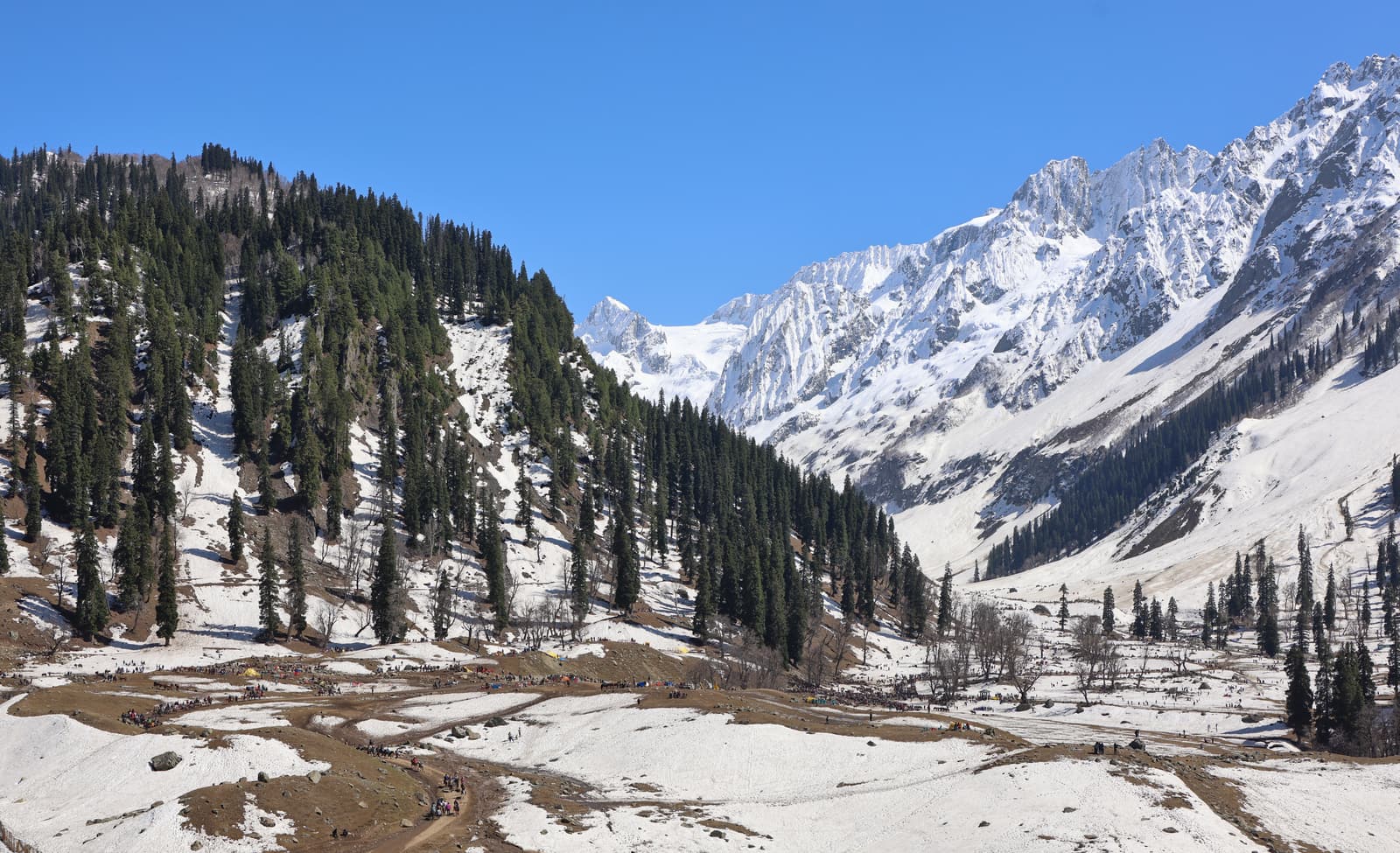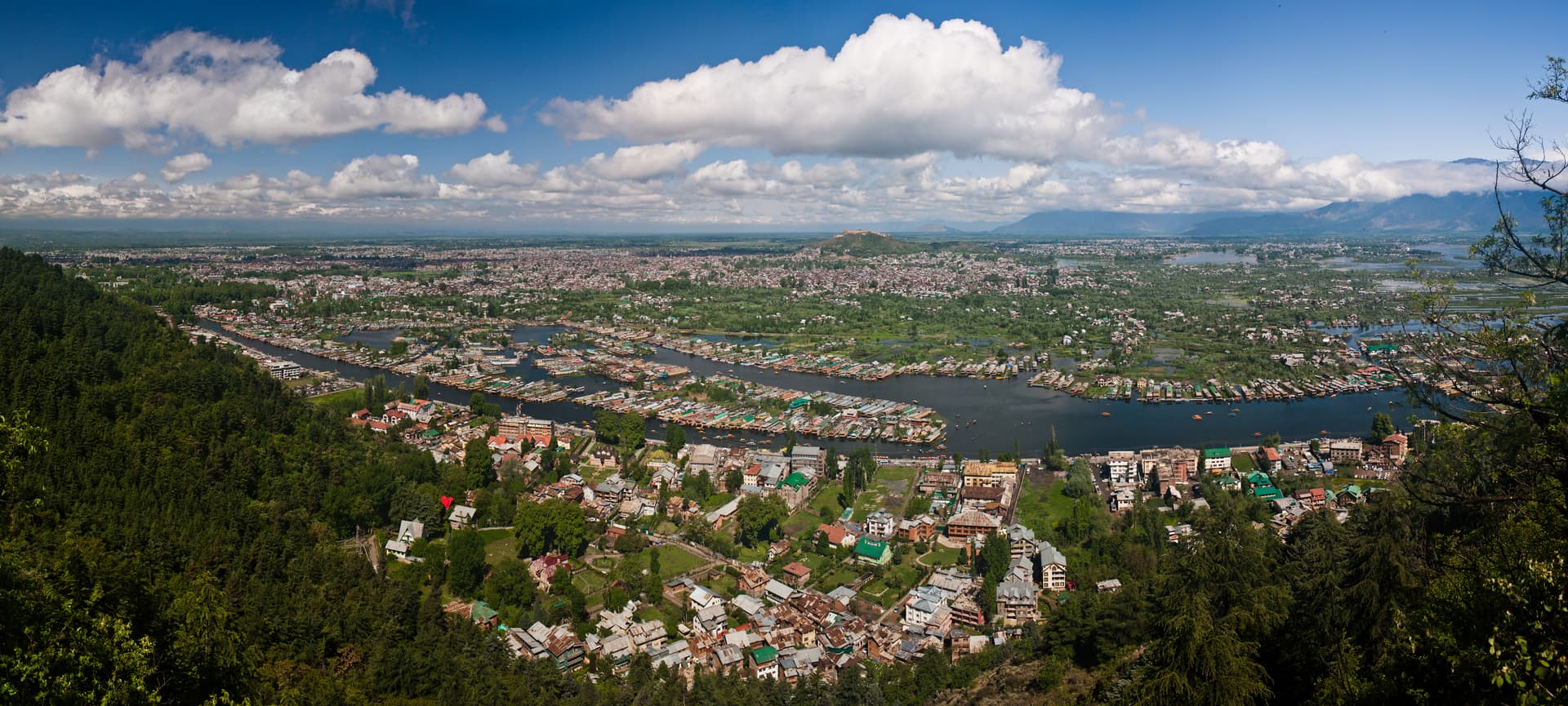
The Kashmir Valley is compact — you can drive from one end to the other in a few hours — but it holds an extraordinary amount: a lake city with a thousand-year history, imperial gardens, Sufi shrines and ancient temples, alpine meadows, glaciers and one of the great food cultures of South Asia. This guide covers the essentials.
Kashmir at a glance
| Fact | Details |
|---|---|
| Location | Union territory of Jammu & Kashmir, northern India, between the Pir Panjal and Great Himalayan ranges |
| Main city | Srinagar (summer capital), about 1,585 m above sea level |
| Airport | Srinagar International Airport (SXR) |
| Rail | Srinagar station on the Udhampur–Srinagar–Baramulla line (Vande Bharat to Katra) |
| Best for | Lakes and houseboats, gardens, meadows, trekking, skiing, crafts and food |
| Languages | Kashmiri and Urdu; Hindi and English widely understood |
| Currency | Indian rupee (₹); cards and UPI in towns, cash for rural areas |
| Phones | Prepaid SIMs from outside J&K generally do not work; postpaid does |
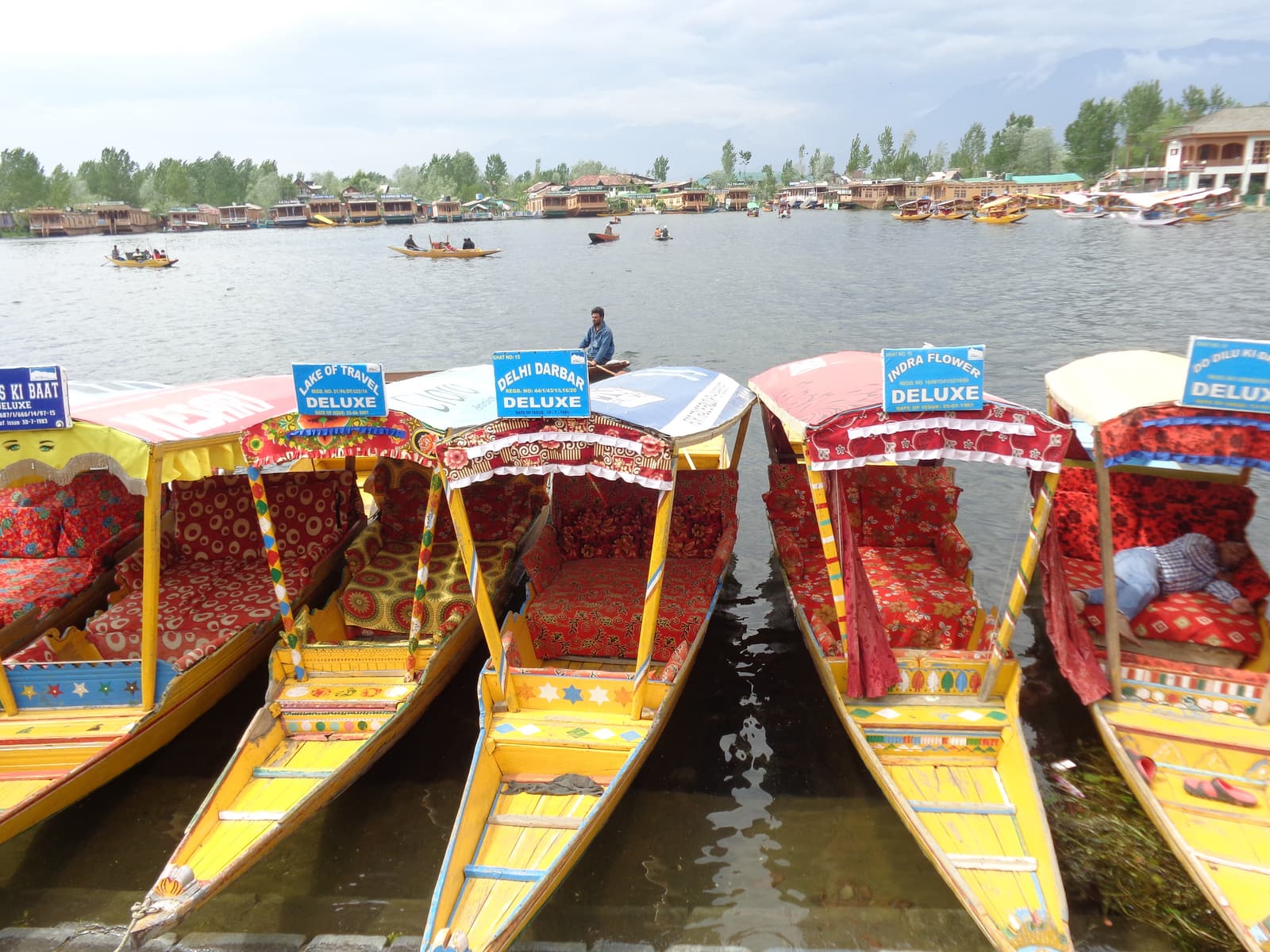 Srinagar: lakes, gardens & shrines
 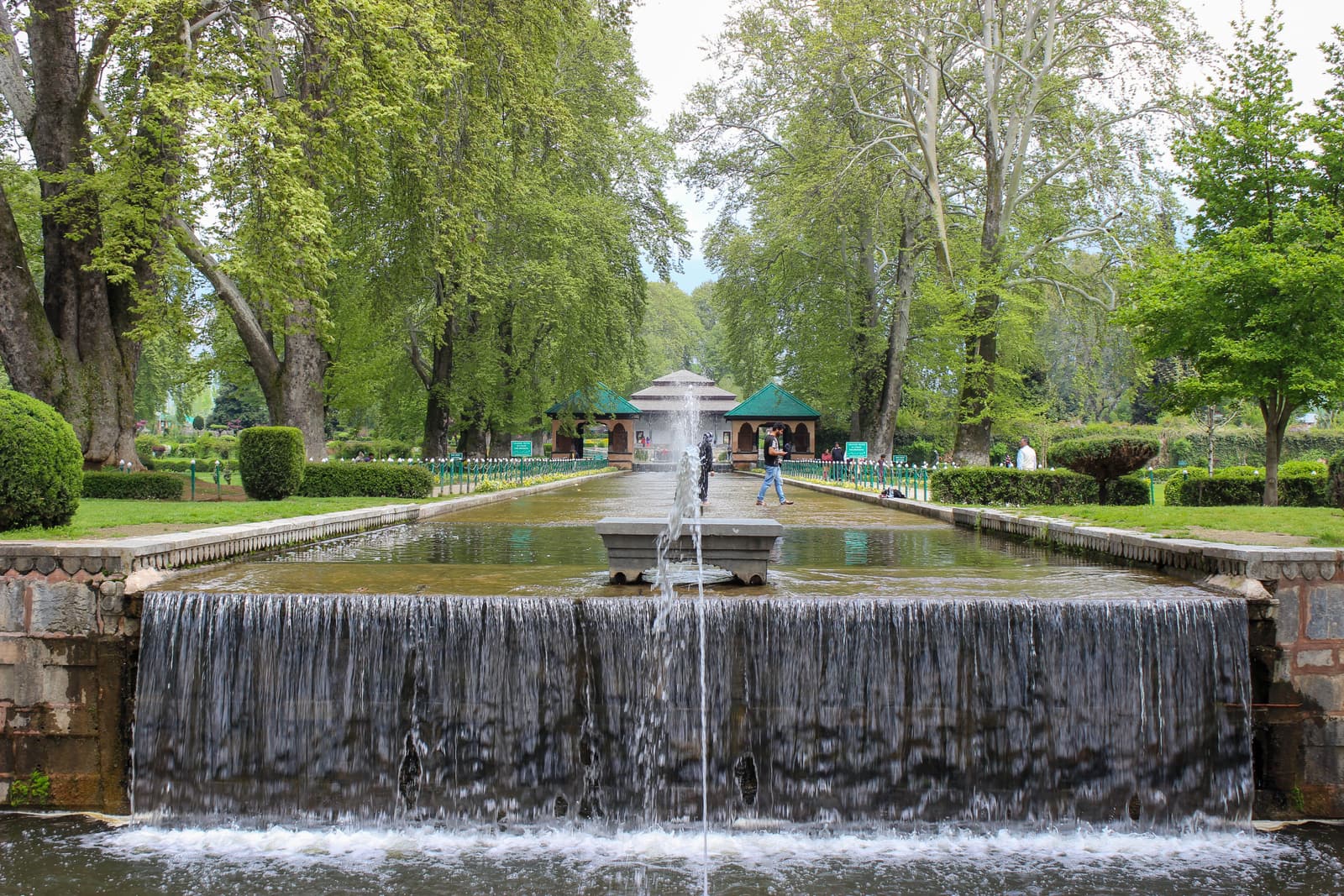 Srinagar: lakes, gardens & shrines
 Mughal Gardens
Shalimar, Nishat, Chashme Shahi & Pari Mahal
Four seventeenth-century imperial gardens on the slopes above Dal Lake: terraces, water channels, fountains and chinar trees laid out for Jahangir, Shah Jahan and their court. Together they are the finest Persian-style gardens in India.
 Srinagar: lakes, gardens & shrines
 Srinagar Old City
Wooden mosques, river bridges and old bazaars
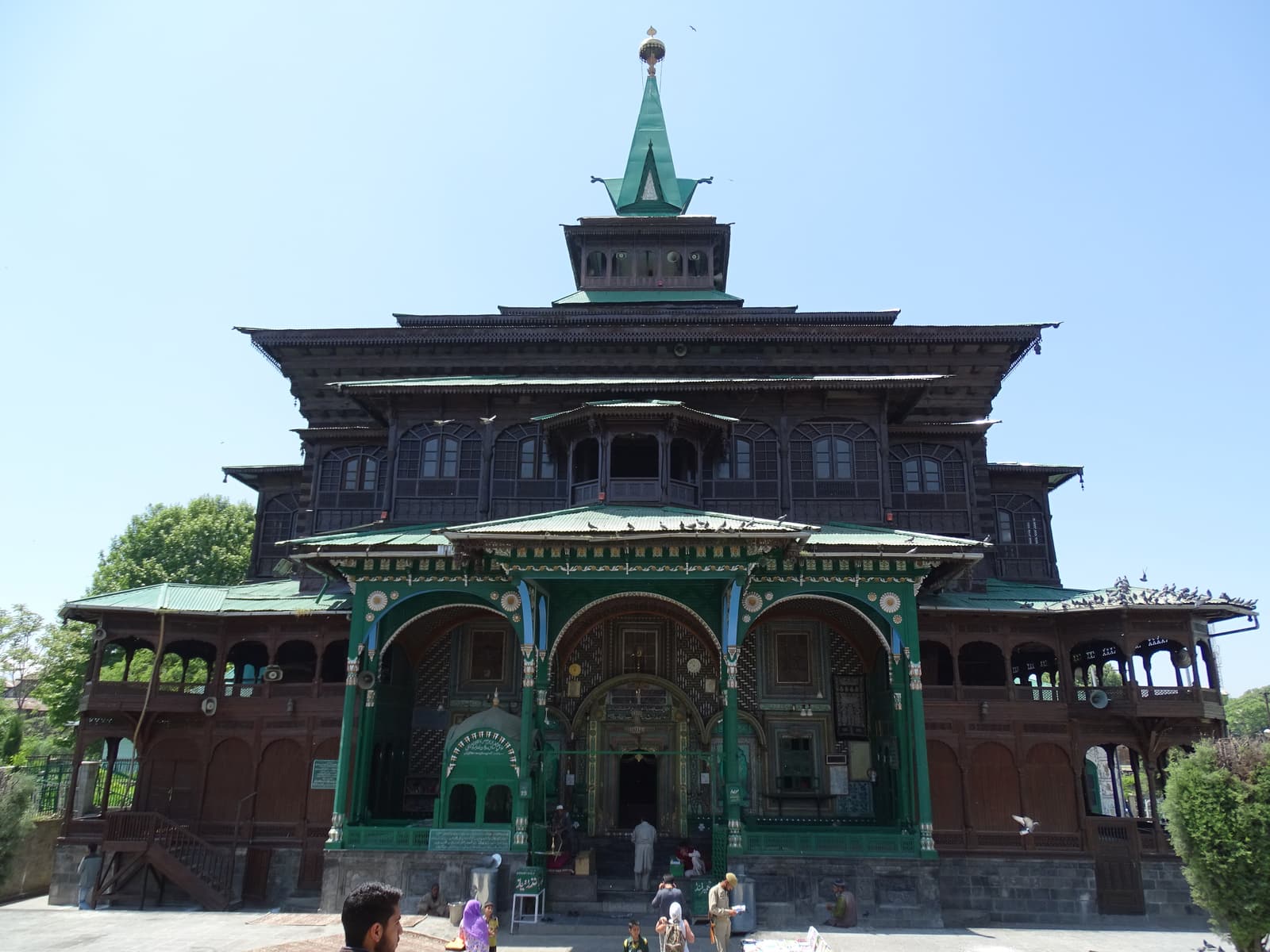
Downtown Srinagar along the Jhelum is where the city’s soul lives: the vast wooden Jamia Masjid, the carved and painted Khanqah of Shah-e-Hamadan, Hari Parbat fort, old bridges and bazaars full of spice, copper and bakeries.
 The great mountain resorts
 Gulmarg
The meadow of flowers — and India’s ski capital
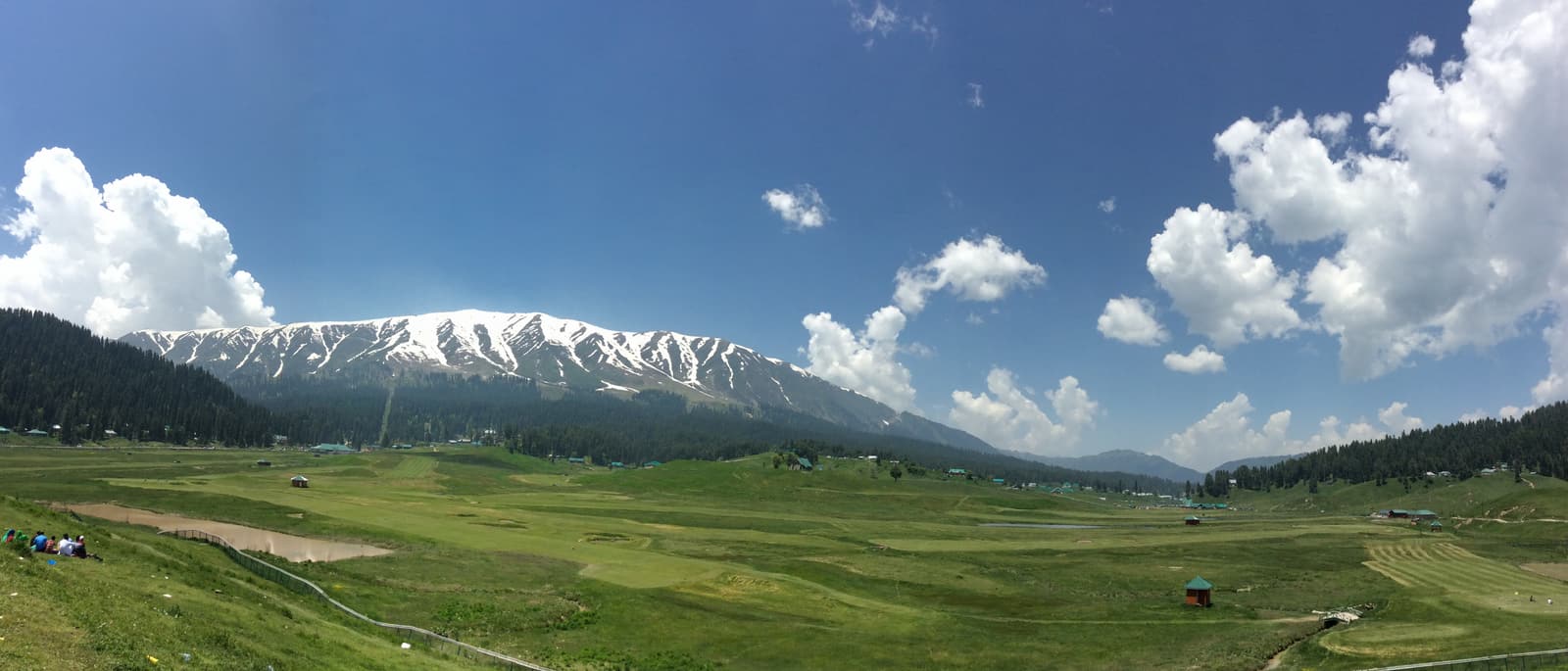
A vast, cup-shaped meadow at around 2,650 m, ringed by fir forest under Mount Apharwat. In summer it is green and full of wildflowers and pony rides; in winter it becomes India’s best-known ski resort, served by one of the highest cable cars in the world.
A short history
Legend says the valley was once a great lake, Satisar, drained by the sage Kashyapa — and geologists agree it was a lake bed. Kashmir became a centre of Hindu and Buddhist learning under dynasties such as the Karkotas, whose king Lalitaditya built the Martand Sun Temple in the 8th century. From the 14th century, Muslim sultans and Sufi missionaries such as Mir Sayyid Ali Hamadani shaped a distinctive Kashmiri Islamic culture; Sultan Zain-ul-Abidin (15th century) is remembered as a patron of crafts.
The Mughals took the valley in 1586 and made it their summer paradise, laying out the gardens around Dal Lake. Afghan and then Sikh rule followed, and from 1846 the Dogra maharajas ruled Jammu & Kashmir as a princely state. Since 1947 the region has been at the centre of a long and complex dispute and periods of conflict. In 2019 Jammu & Kashmir became a union territory of India. For visitors, the result is a region of great hospitality and beauty where it pays to stay informed.
How many days do you need?
- Three days: Srinagar (shikara, gardens, old city) plus one mountain day trip — Gulmarg or Sonamarg.
- Five days: the sweet spot. Srinagar with a night on a houseboat, and day trips or overnights in Gulmarg, Pahalgam and Sonamarg.
- A week or more: add Betaab and Aru valleys, Doodhpathri or Yusmarg, a trek, or continue over Zoji La to Ladakh in summer.
What to see
In Srinagar: Dal Lake, the Mughal gardens, the old city, Hazratbal, Shankaracharya hill and, in April, the Tulip Garden. Beyond: Gulmarg, Pahalgam with Betaab and Aru, Sonamarg, and the quieter Doodhpathri and Yusmarg.
Houseboats
Srinagar’s houseboats — around a thousand of them on Dal Lake, Nigeen Lake and the Jhelum — are carved cedar boats with sitting rooms, dining rooms and bedrooms, moored permanently and reached by shikara. They are graded by the tourism department from deluxe downwards. Choose a registered boat with recent reviews, ask whether meals and shikara transfers are included, and consider Nigeen Lake for peace. See where to stay.
Food and drink
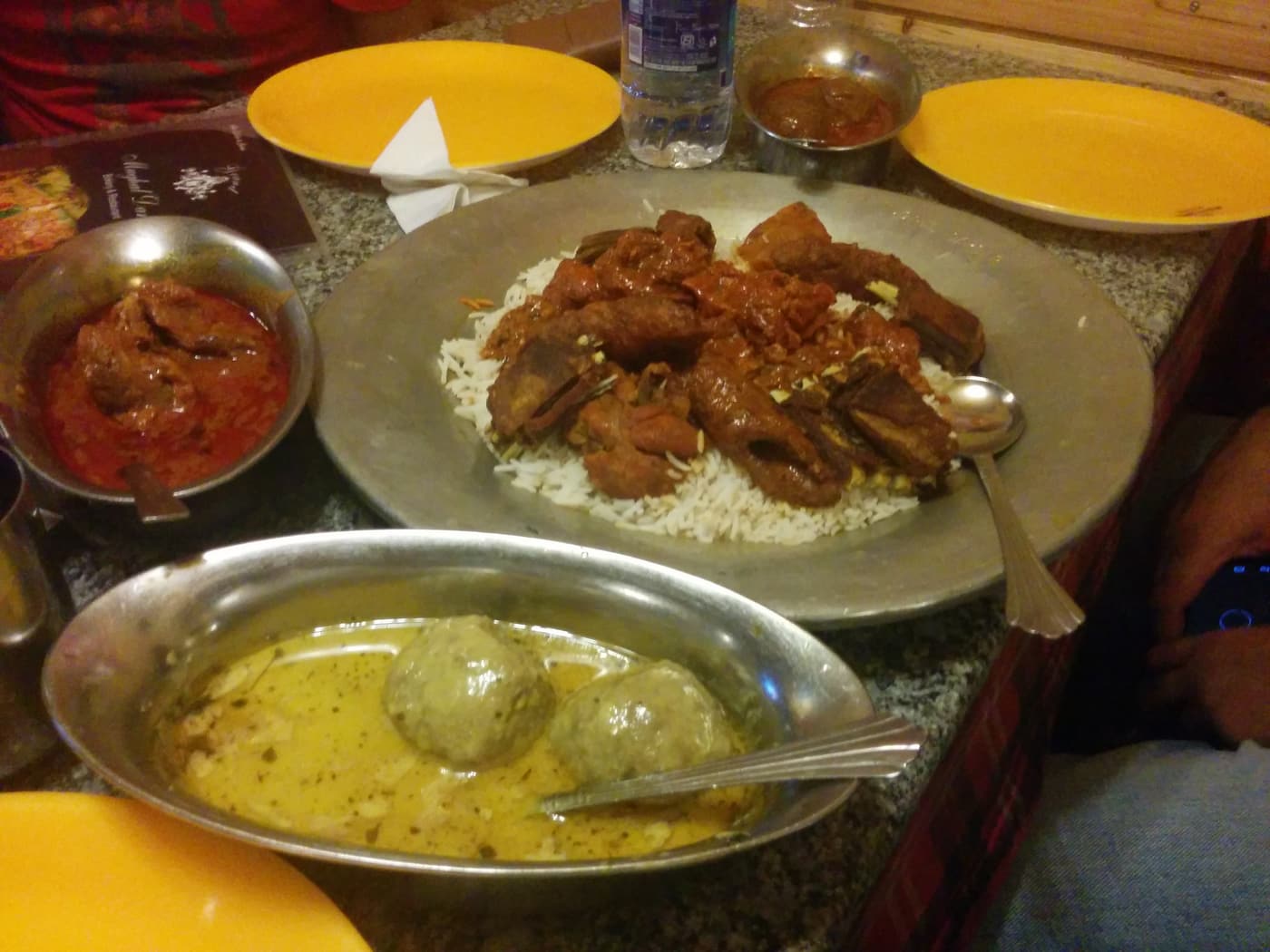
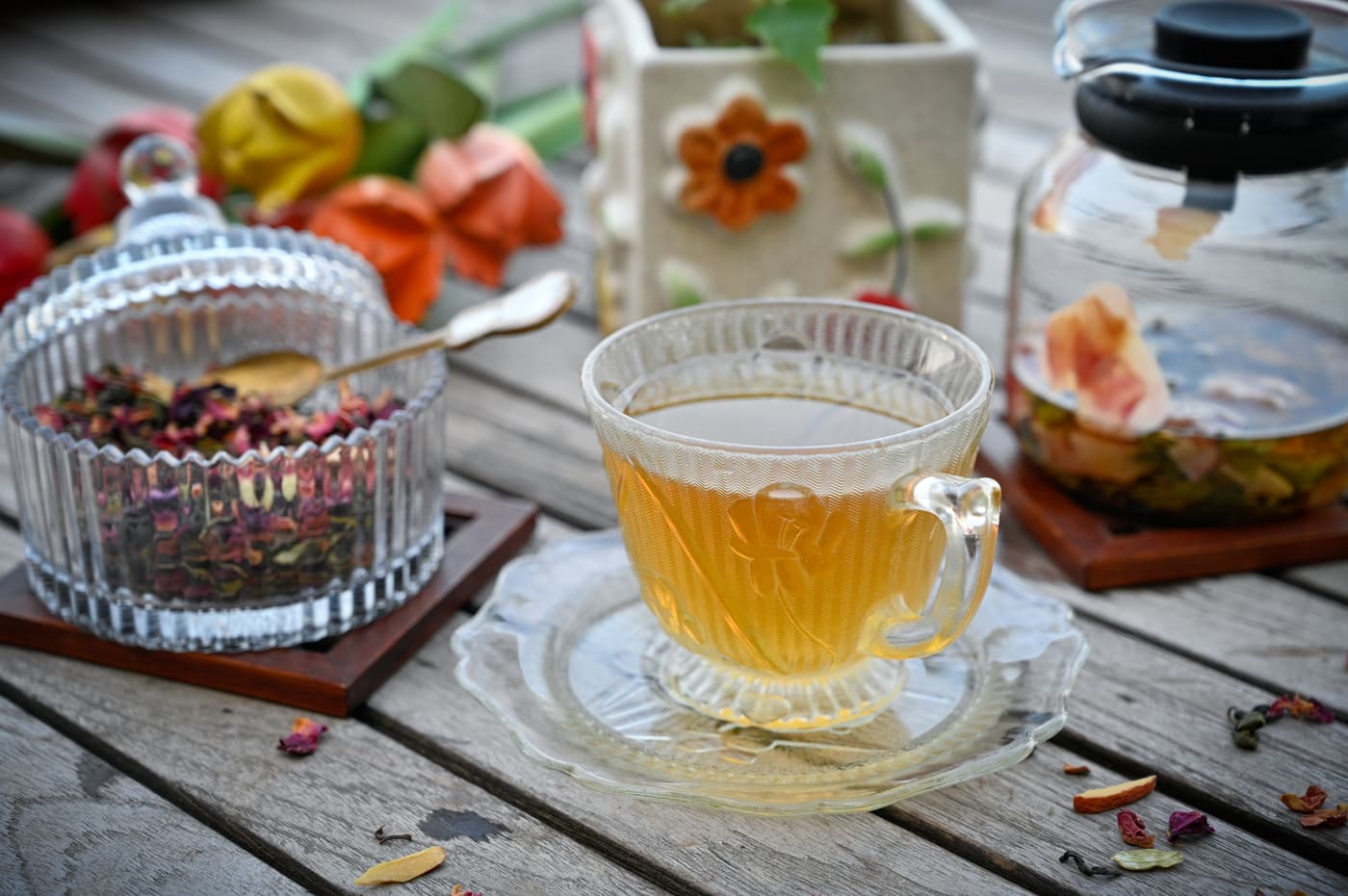
The great feast of Kashmir is wazwan: a multi-course meal, traditionally cooked by a master chef (vasta waza) and shared from a large copper plate (trami), with dishes such as rista and gushtaba (meatballs in red and yoghurt gravies), rogan josh, tabak maaz (fried ribs) and yakhni. Vegetarians should try nadru (lotus stem), dum aloo and haak (collard greens). Drink kahwa, green tea with saffron, cardamom and almonds, or pink salted noon chai with breads from the local baker — girda, lavasa and flaky bakarkhani. In winter look for harissa, a slow-cooked mutton breakfast.
Crafts and shopping
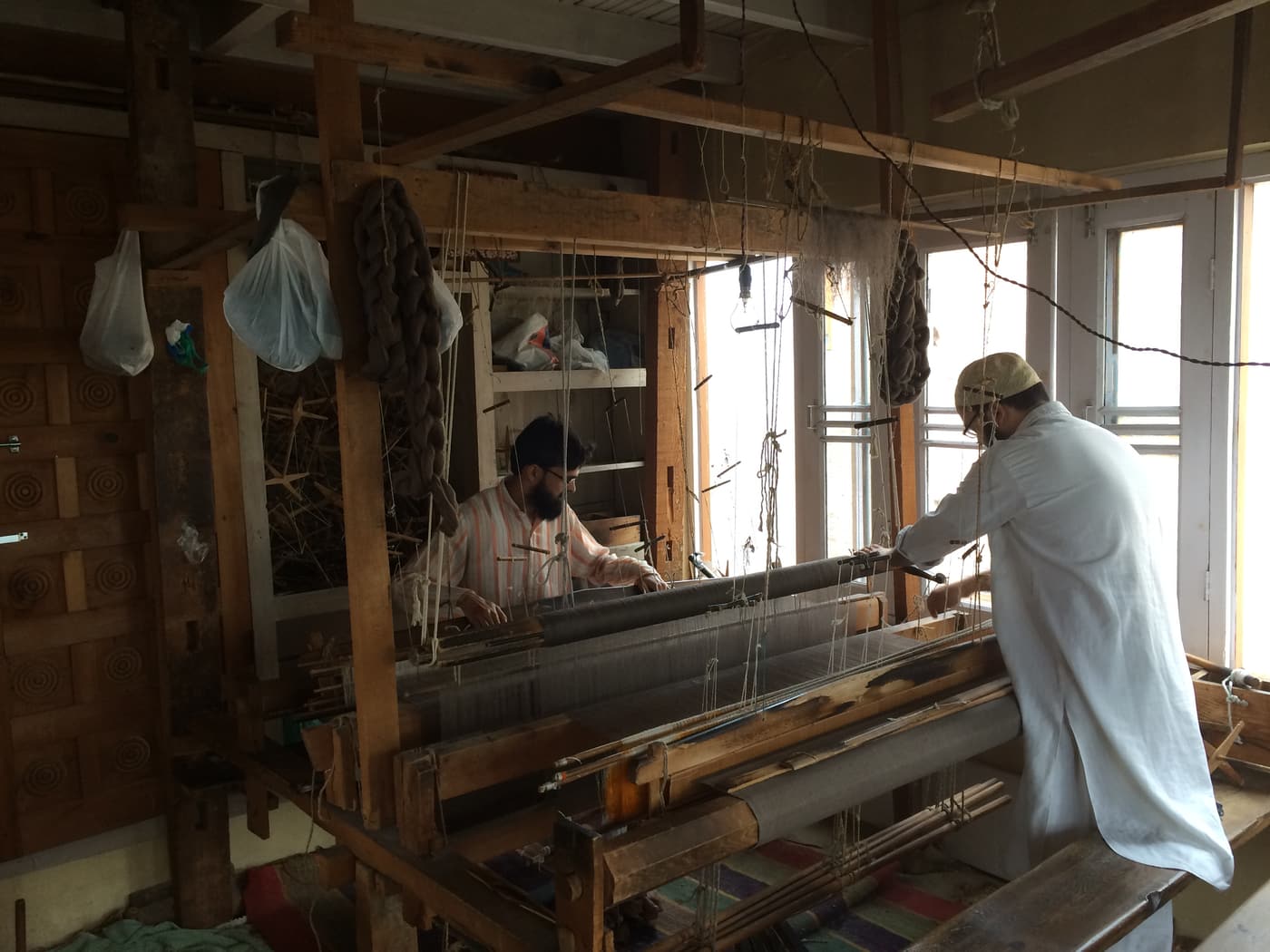
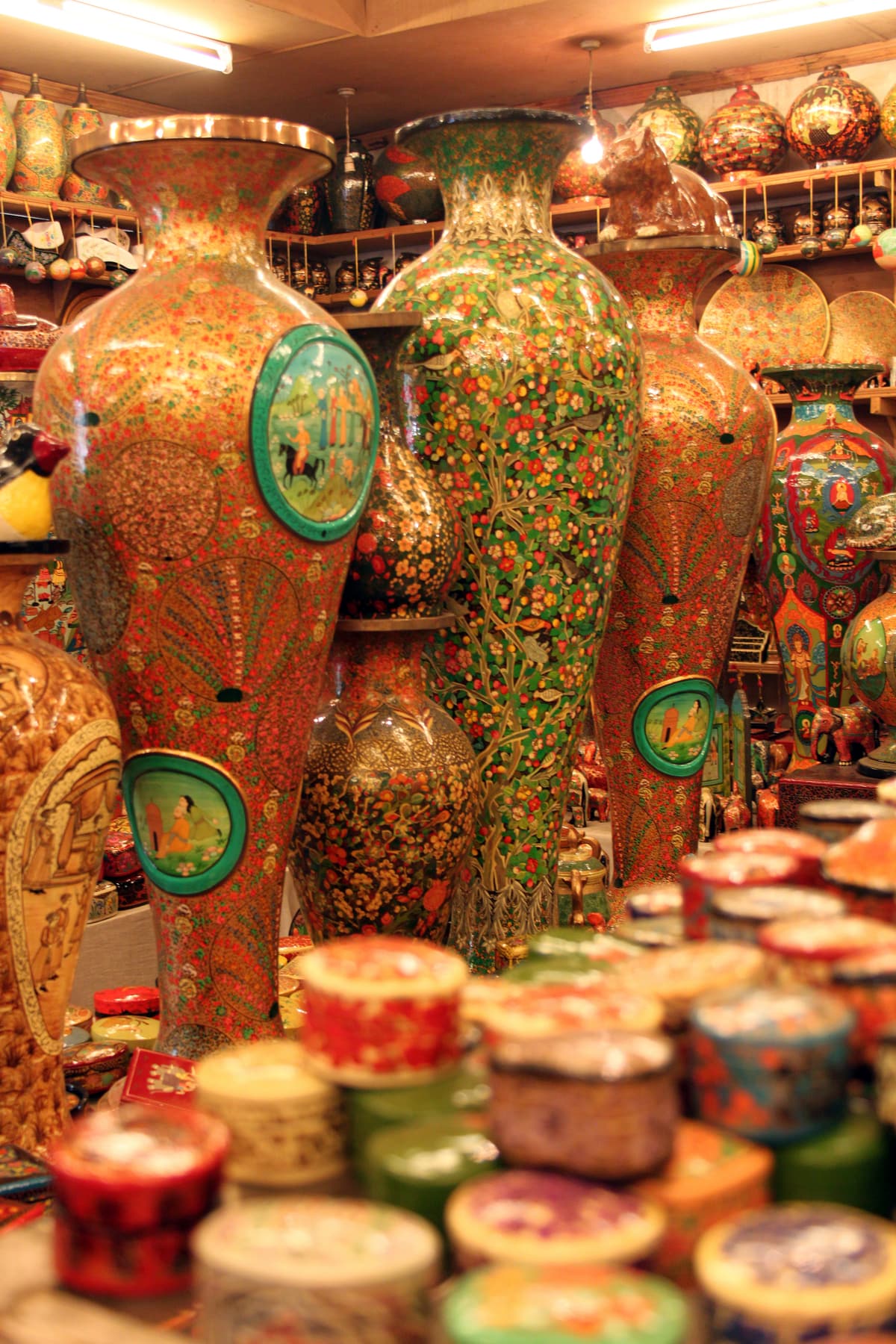
Kashmir is famous for pashmina shawls (GI-tagged, hand-spun and hand-woven from fine goat wool), sozni and crewel embroidery, hand-knotted silk and wool carpets, papier-mâché, walnut-wood carving, copperware and GI-tagged Kashmiri saffron from Pampore. Quality varies enormously: buy from government emporia or long-established shops, ask for certification where it exists (for pashmina and saffron), and be wary of commission-driven “factory visits”.
Money and connectivity
ATMs are plentiful in Srinagar and present in Gulmarg, Pahalgam and Sonamarg, though they can run dry in peak season. Cards and UPI work in hotels, restaurants and many shops; carry cash for ponies, shikaras, taxis and small vendors. Remember that prepaid SIMs from outside J&K generally do not work — see getting here.
Safety, etiquette and advisories
- Check advisories: read your government’s current travel advice and follow local instructions; conditions and access can change at short notice.
- Carry ID: keep a photo ID (passport for foreigners) with you; you may be asked for it at checkpoints and hotels.
- Dress modestly: Kashmir is conservative; cover shoulders and knees, and women should carry a scarf for shrines.
- Respect prayer times and Ramadan: avoid eating conspicuously in public during Ramadan fasting hours.
- Photography: ask before photographing people; do not photograph security installations or personnel.
- Mountains: weather changes fast at altitude; hire certified guides for treks and off-piste skiing.
- Agree prices first: for shikaras, ponies, sledges and taxis, check official rate boards and agree before you start.
What to pack
- Warm layers all year — nights are cool even in summer, and bitterly cold in winter.
- A waterproof jacket and good walking shoes (waterproof boots for snow).
- Sunglasses and high-factor sunscreen for Gulmarg and Sonamarg.
- A scarf or shawl for visiting shrines.
- Printed copies of bookings and ID, plus some cash.
Sample five-day itinerary
Day 1: arrive in Srinagar; check in to a houseboat; sunset shikara ride. Day 2: floating market at dawn; Shankaracharya hill; the Mughal gardens; evening on the Boulevard. Day 3: day trip to Gulmarg and the gondola. Day 4: Pahalgam via Pampore and Awantipora; overnight by the Lidder; Betaab Valley. Day 5: Aru in the morning; drive back to Srinagar for the old city and a wazwan dinner — or add Sonamarg on a sixth day.